

Getting Started with A/B Testing: A Complete Guide
Learn the fundamentals of A/B testing and how to run your first experiment to improve conversion rates on your website.

Getting Started with A/B Testing: A Complete Guide
A/B testing is one of the most powerful tools in a marketer's arsenal for improving website performance. Whether you're looking to increase conversions, reduce bounce rates, or improve user engagement, A/B testing provides the data-driven insights you need to make informed decisions.
What is A/B Testing?
A/B testing, also known as split testing, is a method of comparing two versions of a webpage or app against each other to determine which one performs better. By showing different variants to different users and measuring their behavior, you can identify which changes lead to better outcomes.
How It Works
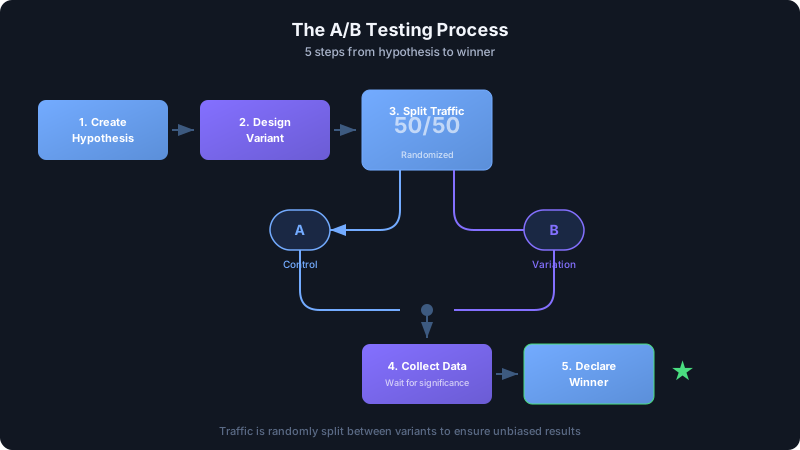
- Create a Hypothesis: Start with a clear hypothesis about what change might improve performance
- Design Variants: Create your control (A) and variation (B) versions
- Split Traffic: Randomly divide your audience between the variants
- Measure Results: Track key metrics to determine the winner
- Implement Winner: Roll out the winning variant to all users
Why A/B Testing Matters
In today's competitive digital landscape, even small improvements can have significant impact:
- Data-Driven Decisions: Remove guesswork and let data guide your choices
- Reduced Risk: Test changes before full implementation
- Continuous Improvement: Build a culture of iterative optimization
- Better User Experience: Understand what truly resonates with your audience
Common Elements to Test
Here are some of the most impactful elements to consider testing:
Headlines and Copy
Your headline is often the first thing visitors see. Testing different approaches can dramatically affect engagement:
- Value propositions
- Emotional vs. rational appeals
- Length and formatting
- Tone of voice
Call-to-Action (CTA) Buttons
CTAs are critical conversion points. Consider testing:
- Button color and size
- Text and messaging
- Placement on the page
- Urgency elements
Forms and Input Fields
Optimize your lead capture by testing:
- Number of fields
- Field order and layout
- Inline validation
- Progress indicators
Images and Media
Visual elements can make or break user engagement:
- Hero images
- Product photography
- Video vs. static content
- Image placement
Best Practices for Successful Tests
1. Test One Variable at a Time
While it might be tempting to test multiple changes at once, isolating variables helps you understand exactly what's driving results.
2. Run Tests Long Enough
Ensure statistical significance by running tests until you have enough data. Stopping too early can lead to false conclusions.
3. Consider Sample Size
Use a sample size calculator to determine how many visitors you need for reliable results.
4. Document Everything
Keep detailed records of your tests, hypotheses, and results. This builds institutional knowledge and prevents repeating failed experiments.
Getting Started with KEAK
KEAK makes A/B testing simple and accessible, even for those without technical expertise. Our AI-powered platform:
- Auto-generates test variants based on proven optimization patterns
- Handles traffic splitting automatically
- Provides real-time analytics so you can monitor progress
- Suggests improvements using machine learning
Conclusion
A/B testing is essential for any business serious about optimization. By systematically testing and iterating on your website, you can achieve continuous improvements that compound over time.
Ready to start your optimization journey? Get started with KEAK and run your first A/B test in minutes.
Have questions about A/B testing? Reach out to our team or check out our documentation for more detailed guides.